Phase 1
Before the Expedition
Educators receive preparation information, packing guidance, expectations, logistics, safety information, and professional learning preparation.

Flagship Educator Fellowship
Experience Arctic science where it is happening.
In Summer 2027, Odyssey Discovery will bring small, competitively selected cohorts of educators to Utqiaġvik (formerly Barrow), Alaska for a 10-day field-based professional learning expedition.
Educators will experience the Arctic environment firsthand and, where schedules and field conditions allow, learn alongside scientists, researchers, conservation professionals, and others working to understand this extraordinary region.
Summer 2027 · June 18–27 · July 9–18 · July 30–August 8 · August 13–22 · Utqiaġvik, Alaska · 10 Days · Maximum 10 Educators Per Expedition
The core idea
Over ten days, educators experience place, science, field research, uncertainty, observation, discovery, and scientific problem-solving — before bringing those experiences back to their students.
Not a vacation. Not a sightseeing tour. Not a conference ballroom. A small-cohort field science expedition in an Arctic community where the research is actually happening.
The setting
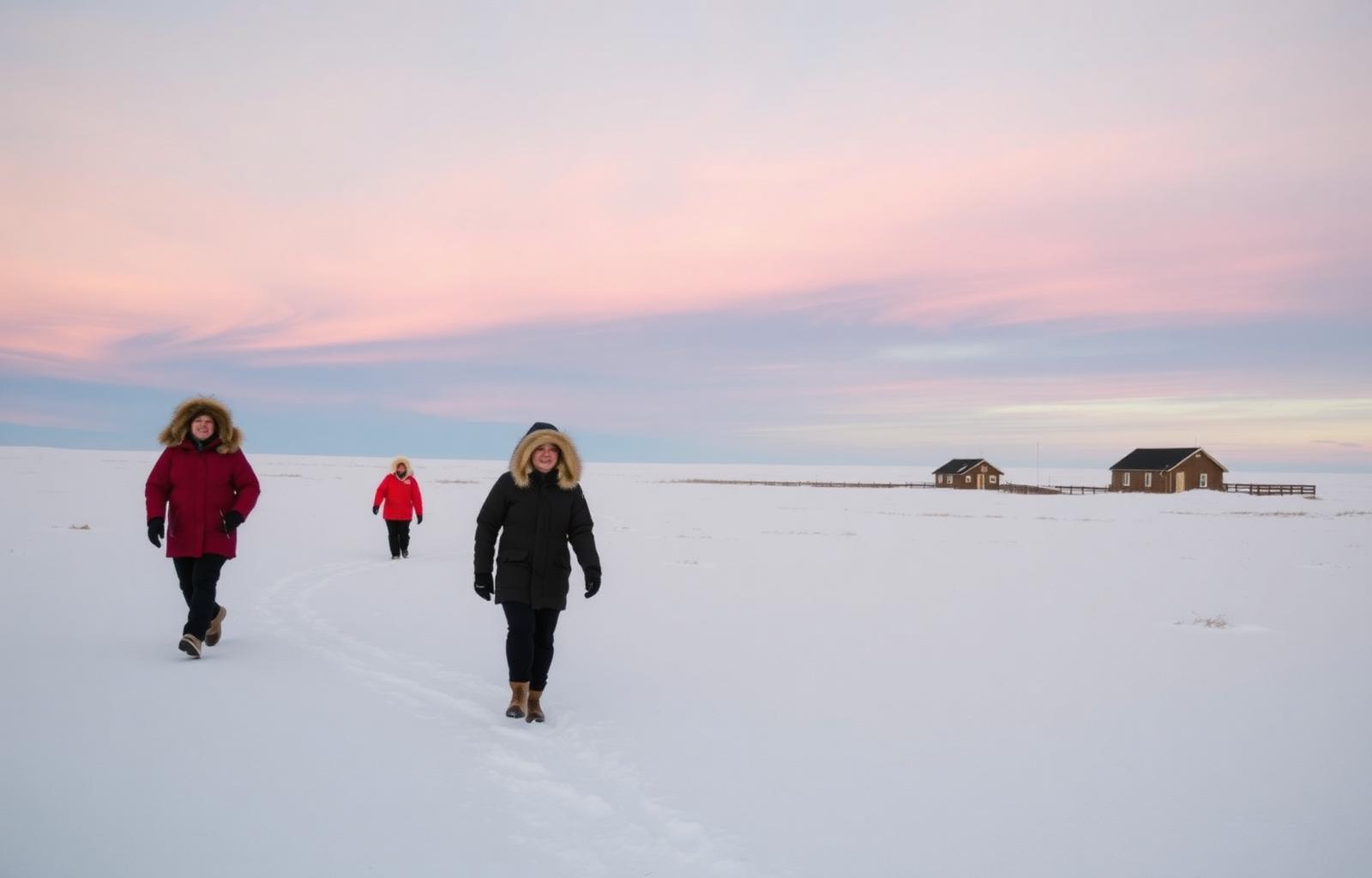
Utqiaġvik isn't simply somewhere we travel to. It is part of what we are there to understand.
The expedition is designed around the intersection of place, people, science, observation, and discovery.
Why field science
Climate change, sea ice, wildlife, permafrost, coastal systems, Arctic ecosystems, scientific research, environmental change — all of it can be studied from a classroom. Being present in the environment creates a different kind of understanding.
Field science doesn't follow a script.
Positioning
The experience is not primarily about sightseeing. It is designed around scientific questions, field observation, researchers, evidence, environmental systems, professional learning, conversations, and firsthand experience.
The destination matters. But the questions matter more.
The experience
The expedition is organized into phases rather than a fixed hour-by-hour itinerary.
Phase 1
Educators receive preparation information, packing guidance, expectations, logistics, safety information, and professional learning preparation.
Phase 2
Participants become oriented to Utqiaġvik, the environment, field conditions, and the purpose of the expedition.
Phase 3
Educators participate in curated experiences connected to Arctic science, research, conservation, environmental change, and other confirmed expedition themes.
Phase 4
Where available and confirmed, educators interact directly with working scientists and researchers.
Phase 5
Participants consider what they are seeing, what questions emerge, and how the experience connects to their own students and teaching.
Phase 6
Educators return with firsthand experiences, scientific context, stories, and ideas they can bring back to their classrooms.
Potential science themes
Expedition experiences are shaped by current research, scientist availability, weather, transportation, community considerations, and field conditions. Not every participant will experience every topic.
Field conditions
The expedition has a planned framework, but the actual experience remains responsive to the conditions and science of the moment. This is not a weakness — it is what working in the field actually looks like.
The cohort
Each expedition is intentionally limited to ten educators. That limit is what makes the experience possible:
Who it's for
You do not need to be an Arctic expert. You need curiosity, flexibility, and a willingness to learn in the field.
What educators take home
Experience → Understanding → Story → Classroom → Student
Professional learning
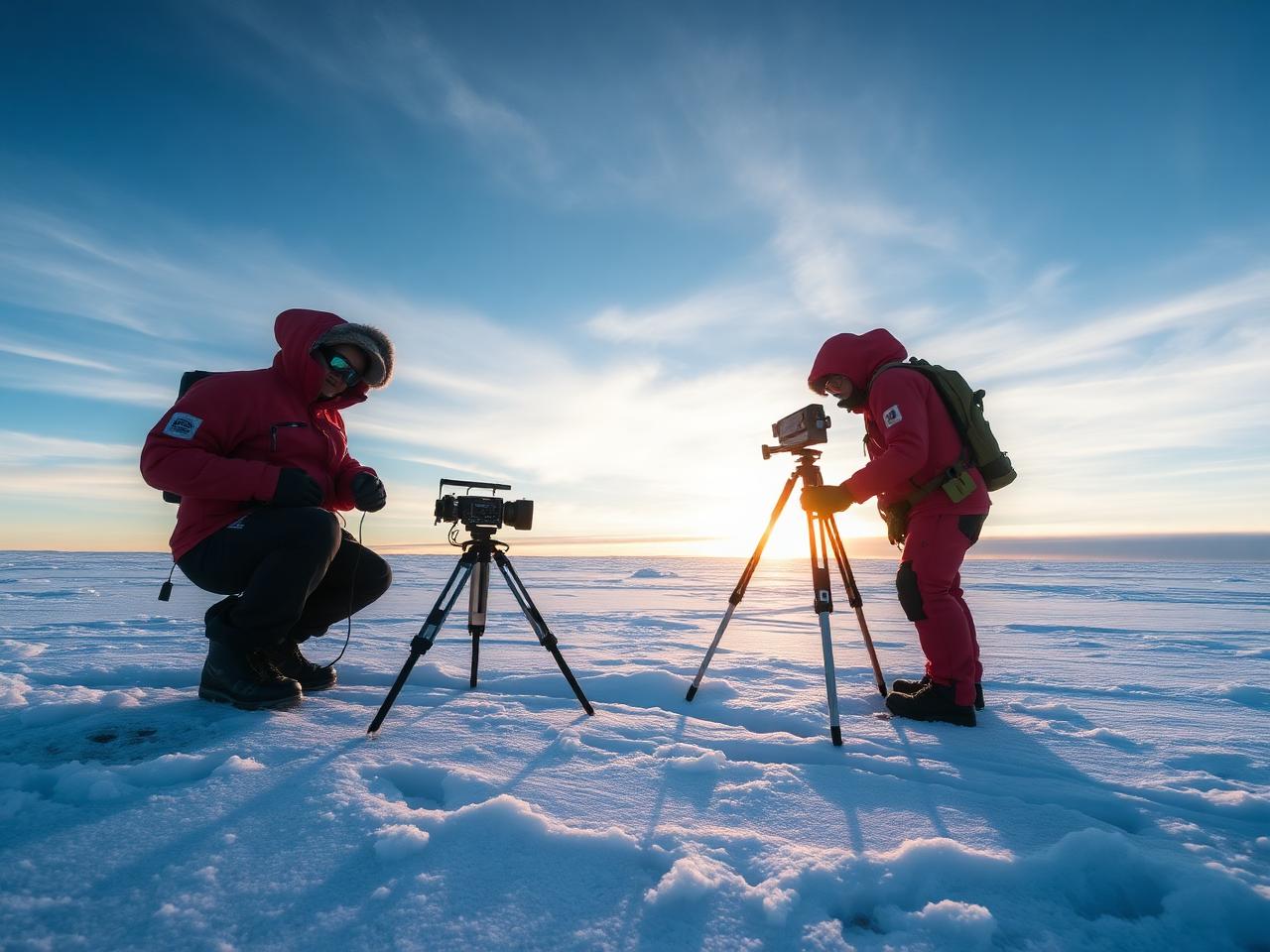
This is not a lecture-based PD conference. The learning happens through observation, conversation, field experience, scientific inquiry, reflection, interaction with researchers, and connecting firsthand experience to classroom practice.
Continuing-education or graduate credit is not currently offered or claimed for this expedition.
2027 details
Final inclusions are confirmed in writing before enrollment.
Airfare and most meals are not included in the $12,975 Fellowship fee, and Odyssey does not guarantee funding for them. Fellows may cover these themselves, pursue school, district or grant funding, or use the Funding Lab to identify potential funding sources.
The investment
The investment reflects what it takes to run a credible Arctic field experience for ten educators per expedition:
What you are investing in is access, experience, learning, and curation.
Odyssey Discovery Educator Fellowship™
The Odyssey Discovery Educator Fellowship is being developed to help educators participate when their schools or districts cannot fully fund the expedition. Fellowship support is not guaranteed, and the Fellowship is a program administered by Odyssey Discovery.
Sponsor → Educator → Field Experience → Classroom → Students
How it works
Six steps, from application to the field.
There is no cost to apply.
If accepted, a $500 Fellowship Commitment secures your place and is credited toward the $12,975 Fellowship fee.
Odyssey pursues program-level sponsors and partners to help fund Fellowship participation. Fellows are not required to personally raise or pay the remaining $12,475.
Fellows may also use school/district professional-development funds, grants, foundations, local sponsors, or personal fundraising. This is encouraged but not required.
About 90 days before the Fellowship, if sufficient funding has not been secured for your participation, you may move your position and $500 commitment to a later Fellowship or receive your $500 back, according to the Fellowship terms.
Once funded, join the 10-day Arctic Discovery Educator Fellowship. Airfare to/from Alaska and Utqiaġvik and most meals are separate.
In plain English
You commit $500. Odyssey leads the effort to fund the Fellowship. You may help pursue funding, but you are not required to personally come up with the remaining $12,475. If sufficient funding is not secured by the protection point, your $500 can be transferred to a later Fellowship or refunded according to the Fellowship terms.
For sponsors
We invite a small number of mission-aligned companies and organizations to fund educator participation in the 2027 expedition. $12,975 supports one educator, $25,000 supports two, and $50,000 supports up to four. Custom multi-educator partnerships are available. Odyssey Discovery is a for-profit company, so sponsorship is a business partnership — not a charitable, tax-deductible donation.
Safety & responsibility
Participants receive preparation materials covering the environment, field conditions, and what to expect before departure.
Educators are expected to follow field guidance, respect community norms, and participate as members of a small cohort.
Field activities follow the safety guidance of the expedition team and any host researchers or partners on site.
Travel within Utqiaġvik is coordinated by the expedition. Arctic transportation can be affected by weather and availability.
Emergency contact and response procedures are shared with participants before the expedition begins.
Arctic weather can change quickly, and activities may be modified or rescheduled for participant safety.
A required and recommended clothing and equipment list is provided in advance; appropriate gear is the participant's responsibility.
Participants should be able to spend extended time outdoors in cold, wind, and uneven terrain.
Field expeditions carry inherent risk. Odyssey Discovery plans carefully and prioritizes participant safety, but cannot guarantee conditions, access, or outcomes.
Who leads it
Founder & Director, Odyssey Discovery
Odyssey Discovery was founded by Kirsten Alburg, an educator and instructional designer with nearly three decades of experience creating learning experiences in remote and challenging environments.
She taught for 20 years across Alaska — including six years in the Arctic — and worked as an education specialist for a college in the Arctic. That experience shapes how this expedition is designed: realistic about logistics, respectful of the community, and built around what educators actually need to bring the field home.
How Fellowship funding works
The Fellowship fee is $12,975. A $500 commitment payment reserves your position and is credited toward that fee. From there, Odyssey Discovery leads the work of funding Fellowship positions — not you.
Step 1 — Commit
Make the $500 commitment payment to reserve your Fellowship position.
It demonstrates your commitment to participating and is credited toward the $12,975 Fellowship cost. Applying is free, and nothing is due before you are accepted.
Step 2 — Odyssey pursues funding
Odyssey Discovery takes the lead on pursuing program-level funding through sponsors, partners, grants and other funding sources.
You are not required to personally raise the remaining Fellowship balance. Outside funding decisions rest with independent organizations, so funding cannot be guaranteed.
Step 3 — Optional: pursue your own funding
If you choose, use the Odyssey Funding Lab and our materials to pursue funding through your school, district, grants, foundations, community organizations or local businesses.
This is optional. It can help secure your position sooner, cover expenses outside the Fellowship fee, and let Odyssey's program-level funding support additional educators.
Optional: pursue your own funding
You don't have to fundraise for your Fellowship. But if you'd like to help secure your funding sooner or pursue funding for additional travel expenses, we'll give you tools to help you do it.
Funding you could pursue
Why some Fellows choose to
Odyssey Funding Lab is included — as a resource
Fellowship participants receive access to the Odyssey Funding Lab, which helps educators identify and pursue funding for professional learning, Fellowship participation, airfare and travel, classroom projects and other appropriate educational expenses. It is a resource, not a required fundraising assignment — Odyssey pursues program-level Fellowship funding, and you can optionally use the Funding Lab to pursue additional or independent funding. It does not guarantee funding.
Planned funding protection
90-day funding protection
Approximately 90 days before your cohort begins, Odyssey Discovery determines whether sufficient funding has been secured for your Fellowship position. If it has not, you do not simply lose your $500 because Odyssey was unable to secure program funding.
You choose. Odyssey does not transfer you automatically, does not make you keep waiting, and never requires you to personally produce the remaining funding in order to receive a refund.
Secured funding may include
It does not include
This protection applies specifically when sufficient Fellowship funding has not been secured. It does not automatically apply to Fellow-initiated withdrawal, cancellation, failure to meet participation requirements, or other circumstances governed by the separate Fellowship cancellation terms. Subject to the final approved Fellowship terms.
Airfare and most meals are not included
Airfare to and from Alaska and most meals are not included in the $12,975 Fellowship fee, and Odyssey Discovery does not guarantee funding for them. Fellows may pay these expenses themselves, pursue school or district funding, pursue grants or other funding, or use the Funding Lab to identify potential funding sources.
Not ready for the Arctic, but looking for funding for something else?
Odyssey Funding Lab can also be used independently by educators looking for funding for classroom projects, professional learning, field experiences, programs and other opportunities. Normal Funding Lab membership applies.
Explore Funding Lab →Questions
Utqiaġvik is an Iñupiat community on Alaska's Arctic coast and a significant location for Arctic scientific research. It is a place where climate, sea ice, ocean, wildlife, permafrost, and coastal systems can be studied firsthand. It isn't simply somewhere we travel to — it is part of what we are there to understand.
Summer 2027 runs in multiple cohort dates: June 18–27, July 9–18, July 30–August 8, and August 13–22. You list your first-choice dates on the application, and we place you in the cohort that fits while keeping each expedition to a maximum of 10 educators.
Ten days allows time for orientation, multiple field experiences, flexibility around weather and research schedules, and genuine reflection — rather than a rushed visit.
A maximum of 10 educators per expedition, across multiple Summer 2027 cohort dates. Fellowship positions are limited by design, and selection is competitive.
No. You need curiosity, flexibility, and a willingness to learn in the field.
No. Airfare to and from Alaska is not included in the $12,975 Fellowship fee, and Odyssey does not guarantee funding for it. Fellows may pay it themselves, pursue school, district or grant funding, or use the Funding Lab to look for funding sources.
Most meals are not included in the $12,975 Fellowship fee, and Odyssey does not guarantee funding for them. As with airfare, Fellows may cover them personally or pursue outside funding.
Once you are accepted into the Fellowship, a $500 commitment payment reserves your position, demonstrates your commitment to participating, and is credited toward your $12,975 Fellowship fee. Odyssey Discovery then takes the lead on pursuing program-level funding through sponsors, partners, grants and other sources — you are not required to personally raise the remaining balance.
No. Odyssey Discovery leads the work of funding Fellowship positions. You may pursue funding yourself if you'd like — school or district funds, professional-development funds, education foundations, grants, community organizations, local businesses — which can help secure your position sooner, cover expenses outside the fee such as airfare and meals, and let Odyssey's program-level funding support additional educators. Fellowship participants receive Odyssey Funding Lab access as a resource for that, not as a required assignment.
Each expedition holds only 10 seats, and Arctic lodging, transportation, and field coordination are committed months in advance. The commitment payment confirms your seat is real — it tells us to hold your place, begin pursuing funding for your position, and turn away no one else for that seat.
Approximately 90 days before your cohort begins, Odyssey determines whether sufficient funding has been secured for your Fellowship position. Secured funding means funds received, approved program funding formally allocated to your position, or sufficiently binding documented commitments Odyssey reasonably expects to receive — not prospective sponsors, pending grant applications, verbal possibilities, pipeline value or speculative funding. If sufficient funding has not been secured, you do not simply lose your $500. You choose: a refund of the $500, or a transfer of your position and your $500 to another available Arctic Discovery cohort. Subject to the final approved Fellowship terms. This protection covers unsecured funding — withdrawal or cancellation by the Fellow is governed by the separate Fellowship cancellation terms.
Each Summer 2027 Arctic Discovery expedition is subject to sufficient funded participation and final operational confirmation. Odyssey Discovery makes a final GO/NO-GO determination approximately 90 days before departure: March 20, 2027 for June 18–27; April 10, 2027 for July 9–18; May 1, 2027 for July 30–August 8; and May 15, 2027 for August 13–22. Until GO status is issued, the expedition remains subject to final confirmation, so please consider that before making non-refundable independent travel purchases — refundable or changeable arrangements and appropriate travel insurance are wise. Cohorts that clearly meet the required cohort funding and participation threshold may be confirmed earlier.
The expedition has a planned framework and remains responsive to conditions. When weather, flights, or field access change, the schedule adapts. That responsiveness is part of authentic field science.
No. We do not guarantee that any specific scientist, researcher, or research project will be part of the expedition.
Researchers work in the field, and their schedules shift. When that happens, we adjust the program around other confirmed experiences and expedition themes.
No. This is not a lecture-based conference. Learning happens through observation, conversation, field experience, scientific inquiry, and reflection.
Yes, if you'd like to pursue that. It is optional — Odyssey pursues program-level funding either way. If you do want to ask your school or district, we provide the request materials, grant-ready Fellowship information and Funding Lab access to help.
The Odyssey Discovery Educator Fellowship is being developed to help educators participate when their schools or districts cannot fully fund the expedition. Fellowship support is not guaranteed.
Yes. $12,975 funds one educator, $25,000 funds two, and $50,000 funds up to four, with custom multi-educator partnerships available. Full details are on the Fellowship page. Odyssey Discovery is a for-profit company, so sponsorship is a business partnership rather than a tax-deductible donation.
Educators return with firsthand experience, scientific context, field stories, classroom ideas, and professional connections with the rest of the cohort.
No. Science, STEM, environmental, conservation, outdoor, college, and informal science educators are all a good fit.
Spend 10 days in Utqiaġvik.
Learn from people doing the work.
Experience the Arctic firsthand.
Bring the field back to your students.
Summer 2027 · Utqiaġvik, Alaska · Limited Fellowship positions · Maximum 10 educators per expedition · Target investment: $12,975